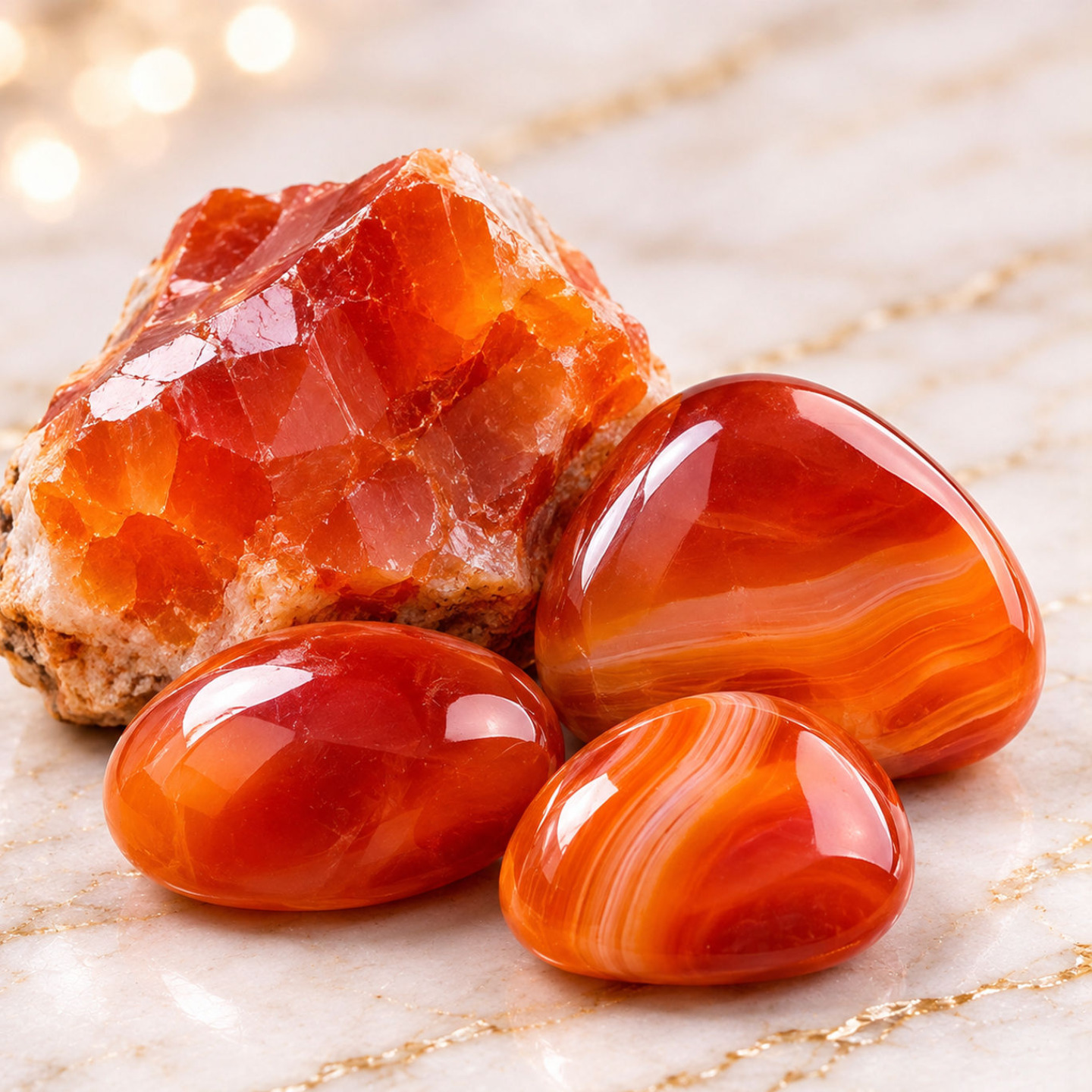
Carnelian is a warm, translucent stone in the colours of fire – from honey orange to deep red. It is a variety of chalcedony and owes its colour to iron oxides.
The name
There are two explanations for the name. One says it comes from the Latin word carneus – “flesh-coloured”, the other from the Latin name of the cornel tree, whose red berries have the same colour.
History
Carnelian is one of the oldest stones in jewellery. In ancient Egypt it was carved into amulets and ornaments for the pharaohs. The Romans made signet rings from it, because wax does not stick to the stone. According to legend, Napoleon found an octagonal carnelian seal in Egypt and wore it for the rest of his life.
Symbolism
Carnelian is considered the stone of vitality. Traditionally it is believed to:
- give energy, motivation and the will to act;
- encourage courage and confidence when speaking in front of others;
- awaken creativity and the joy of life;
- bring warmth and protection.
In jewellery
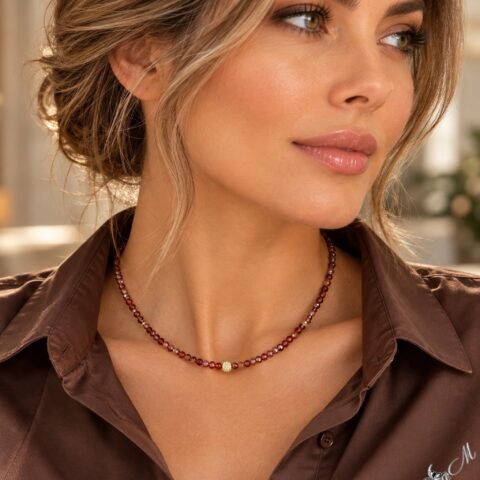
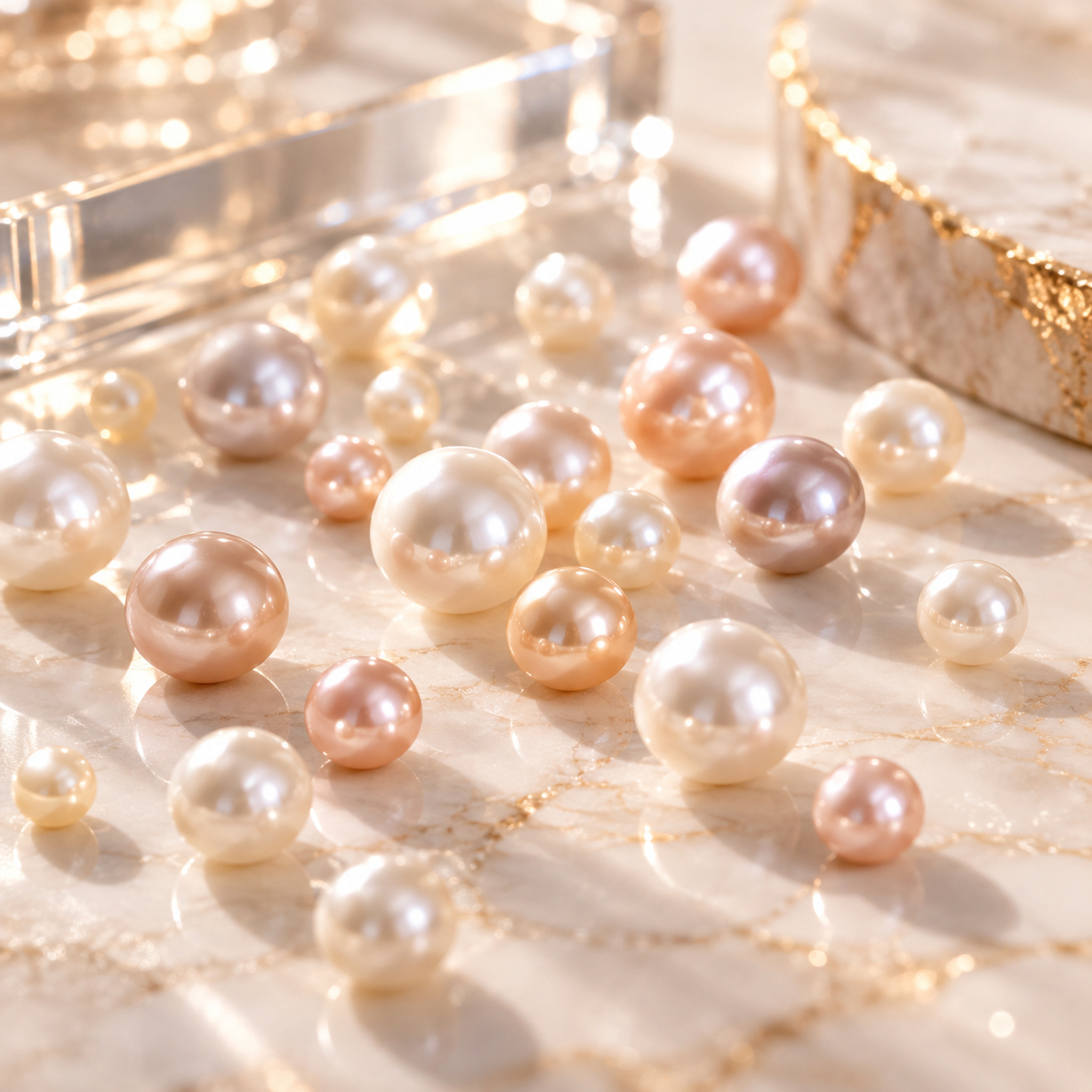
The fiery colour of carnelian warms up any look. It looks wonderful in gold and rose gold, in beaded bracelets and combined with citrine, rock crystal and pearls. With a hardness of 6.5–7 on the Mohs scale it is suitable for everyday wear.