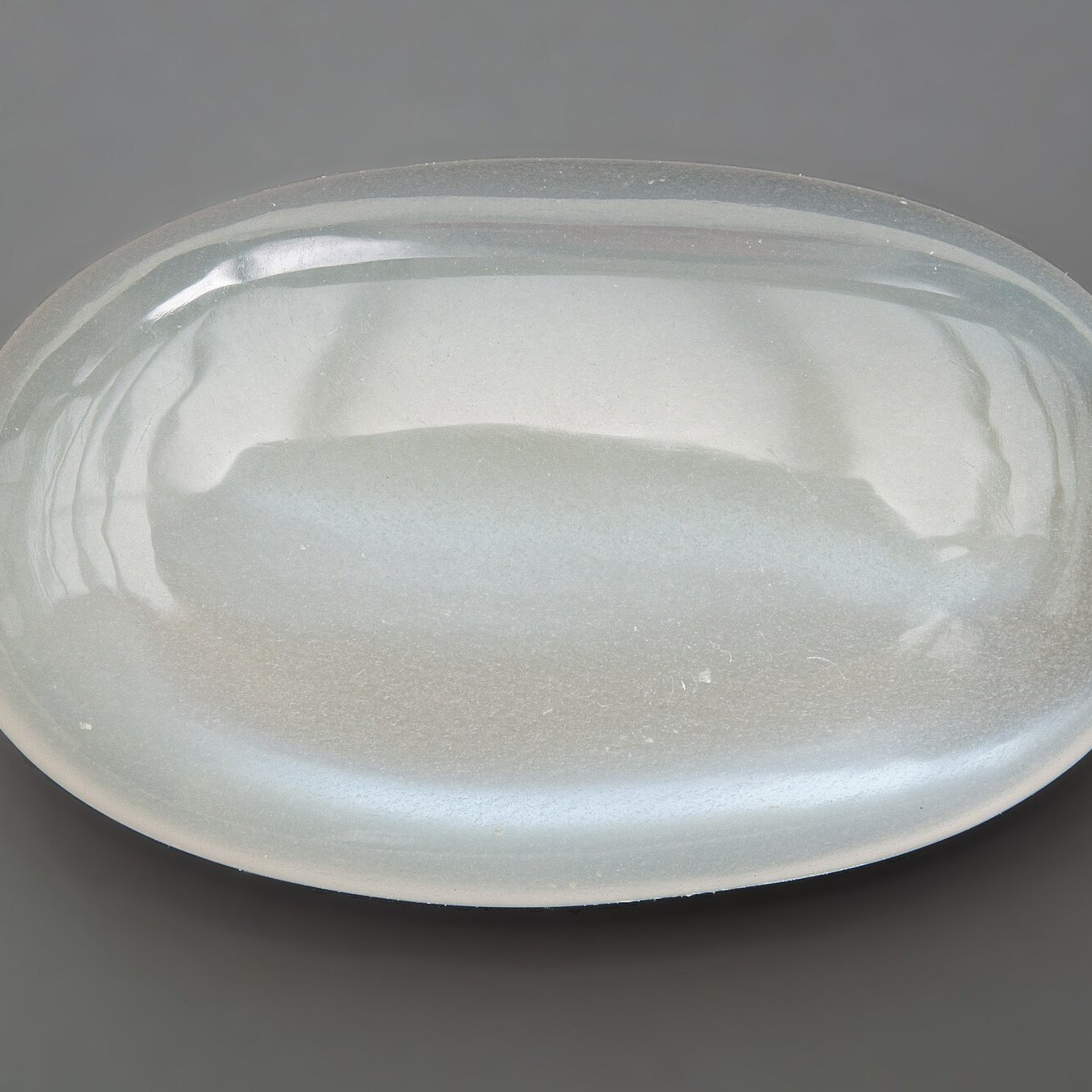
Moonstone owes its name to the soft silvery-blue sheen that glides across its surface as it moves – like moonlight on water. This phenomenon is called adularescence.
Where the light comes from
Moonstone is a mineral of the feldspar group. It is built of extremely thin alternating layers that scatter light. This creates the soft glow that seems to come from within. The finest moonstones with an intense blue sheen come from Sri Lanka and India.
Legends
The Romans believed that moonstone was formed from frozen moonbeams. In India it is a sacred stone and is believed to bring happiness in love – it is traditionally given to lovers and newlyweds. At the beginning of the 20th century moonstone was a favourite of the Art Nouveau masters, who set it in exquisite jewellery with flowing lines.
Symbolism
Moonstone is one of the birthstones for June. It has all the qualities attributed to the moon:
- tenderness and femininity;
- intuition, imagination and inspiration;
- creativity and sensitivity;
- love – which is why it is a fitting gift for lovers.
In jewellery
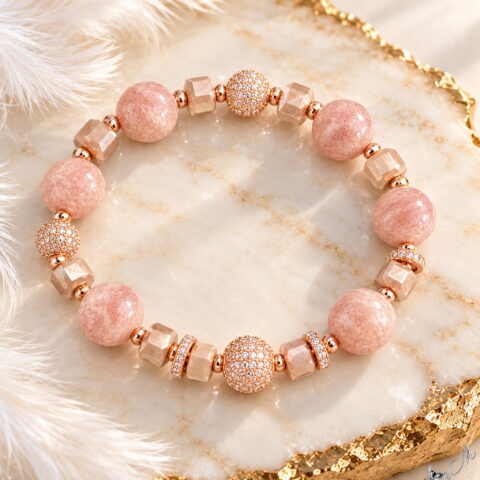
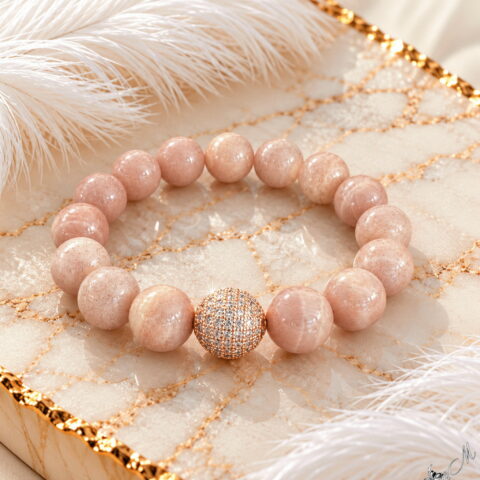
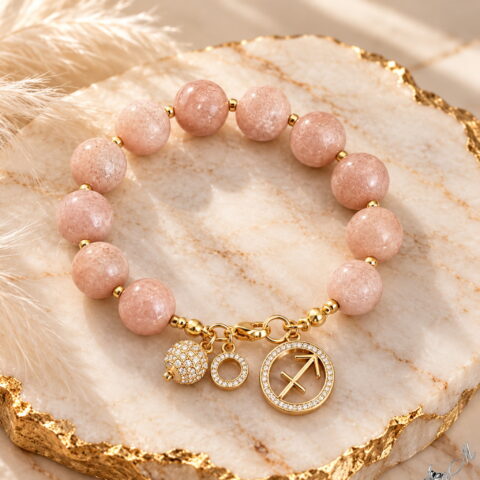
Moonstone jewellery comes in soft white, cream and pinkish-beige tones with pearly blue-grey glints. It looks delicate in silver and combined with pearls, rock crystal and rose quartz. With a hardness of 6–6.5 on the Mohs scale, moonstone is best protected from knocks.
Photo: Wouter Hagens, CC BY-SA 4.0, Wikimedia Commons