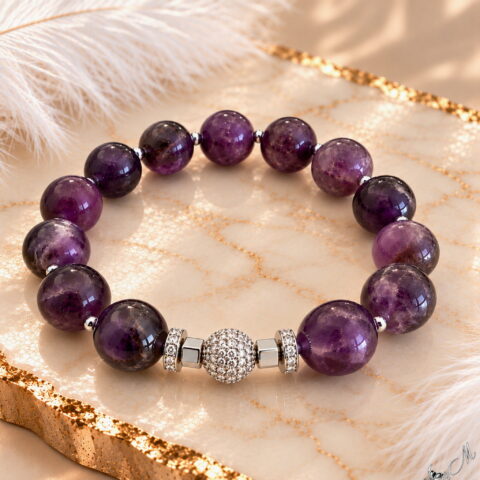
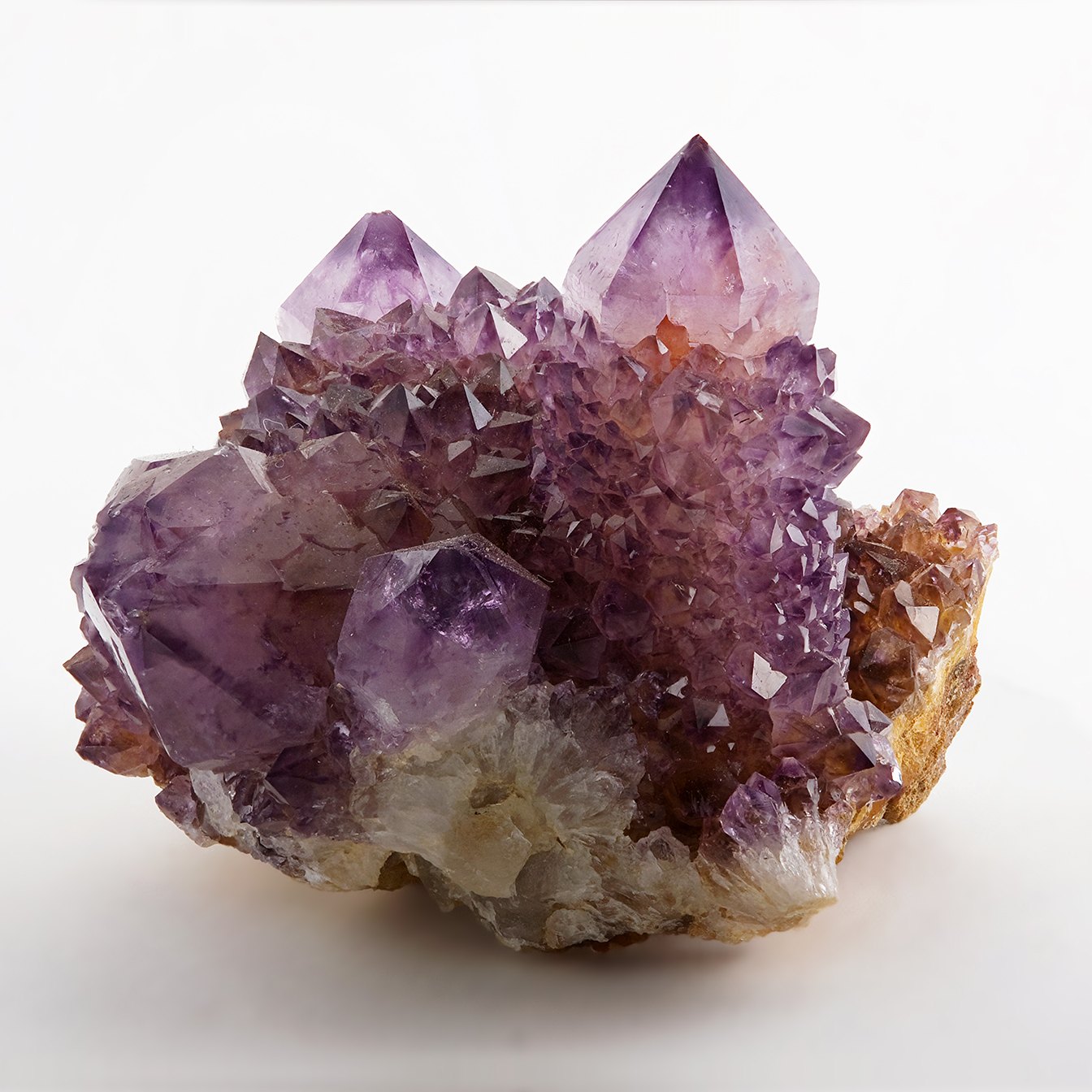
Amethyst is the best-known purple stone – from soft lavender to deep violet. It is a variety of quartz, and its colour comes from traces of iron and natural radiation deep in the earth.
The "sober" stone
The name amethyst comes from the ancient Greek amethystos – "not drunk". The Greeks believed the stone protected against drunkenness and drank wine from amethyst cups. According to myth, the nymph Amethyst was turned into a white crystal, and Dionysus, the god of wine, poured wine over the stone and coloured it purple.
A stone of kings
For centuries amethyst was considered a precious stone and was worth as much as ruby and emerald. It adorned the crowns and sceptres of European rulers and the rings of the clergy. Only when huge deposits were discovered in Brazil in the 19th century did it become available to everyone. Today the largest amethyst geodes – hollow stones lined inside with crystals – come from Brazil and Uruguay.
Symbolism
Amethyst is the birthstone for February. Legend says that Saint Valentine wore an amethyst ring engraved with Cupid – which is why it is also the stone of true love. Traditionally amethyst is a symbol of calm and spirituality – it is believed to tame anger, banish bad thoughts and bring a clear mind and insight. It is also loved as a talisman for success.
In jewellery
Amethyst looks beautiful in silver and gold, in beaded bracelets and in necklaces. Protect it from long exposure to strong sunlight – over time its colour may fade.
Photo: JJ Harrison, CC BY-SA 3.0, Wikimedia Commons