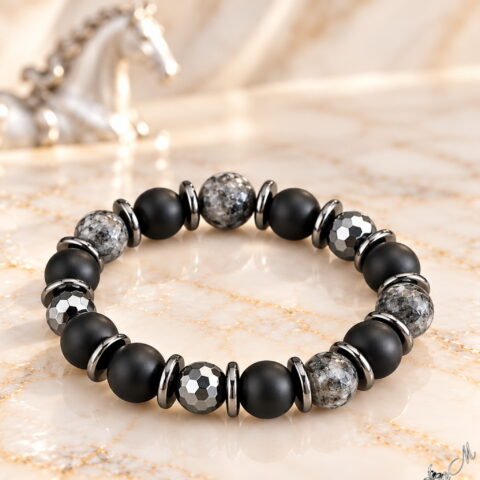
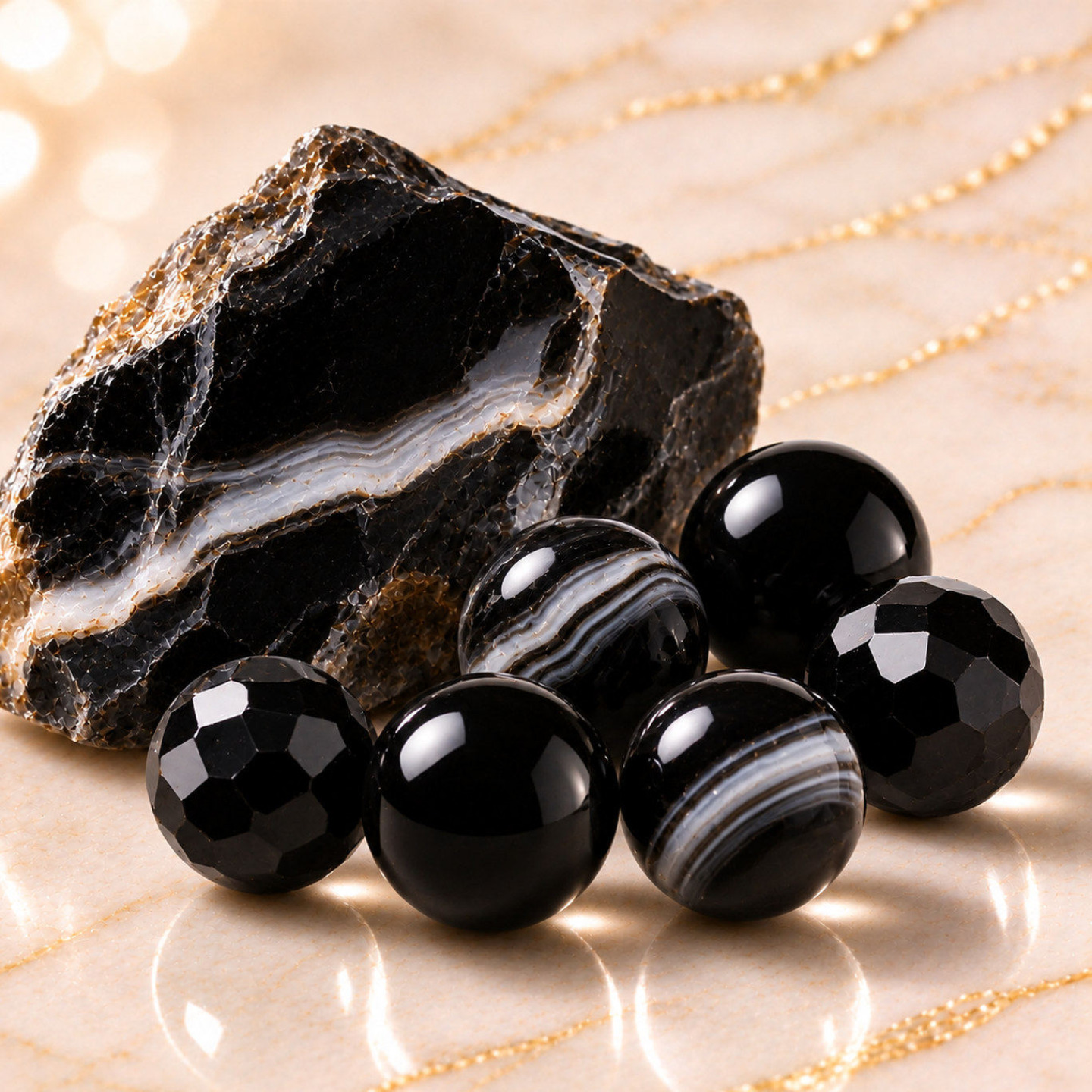
Onyx is a variety of chalcedony and a close relative of agate. It can be black, brown, reddish, green or white with bands, but the best known and most sought after is deep, glossy black onyx.
The name
The name comes from the Greek word onyx – "nail". According to myth, Eros once trimmed the nails of the sleeping Aphrodite with his arrow. The gods would not allow any part of the immortal goddess to perish and turned the clippings into stone.
History
Onyx has been prized since antiquity. In Ancient Rome it was considered one of the most powerful amulets. It was called "the orators' stone" – it was believed to help the speaker be persuasive. Onyx with white and dark layers, called sardonyx, is the favourite stone of cameo carvers.
Today most of the black onyx in jewellery is chalcedony dyed black by a technique known since Roman times – this gives an even, rich colour.
Symbolism
Traditionally onyx is a stone of strength and self-control. It is believed to:
- give confidence, endurance and determination;
- help us move forward towards our goals;
- bring calm and protection from negative energy;
- suit leaders and people with iron discipline.
That is why it is also called the stone of commanders, leaders and pioneers.
In jewellery
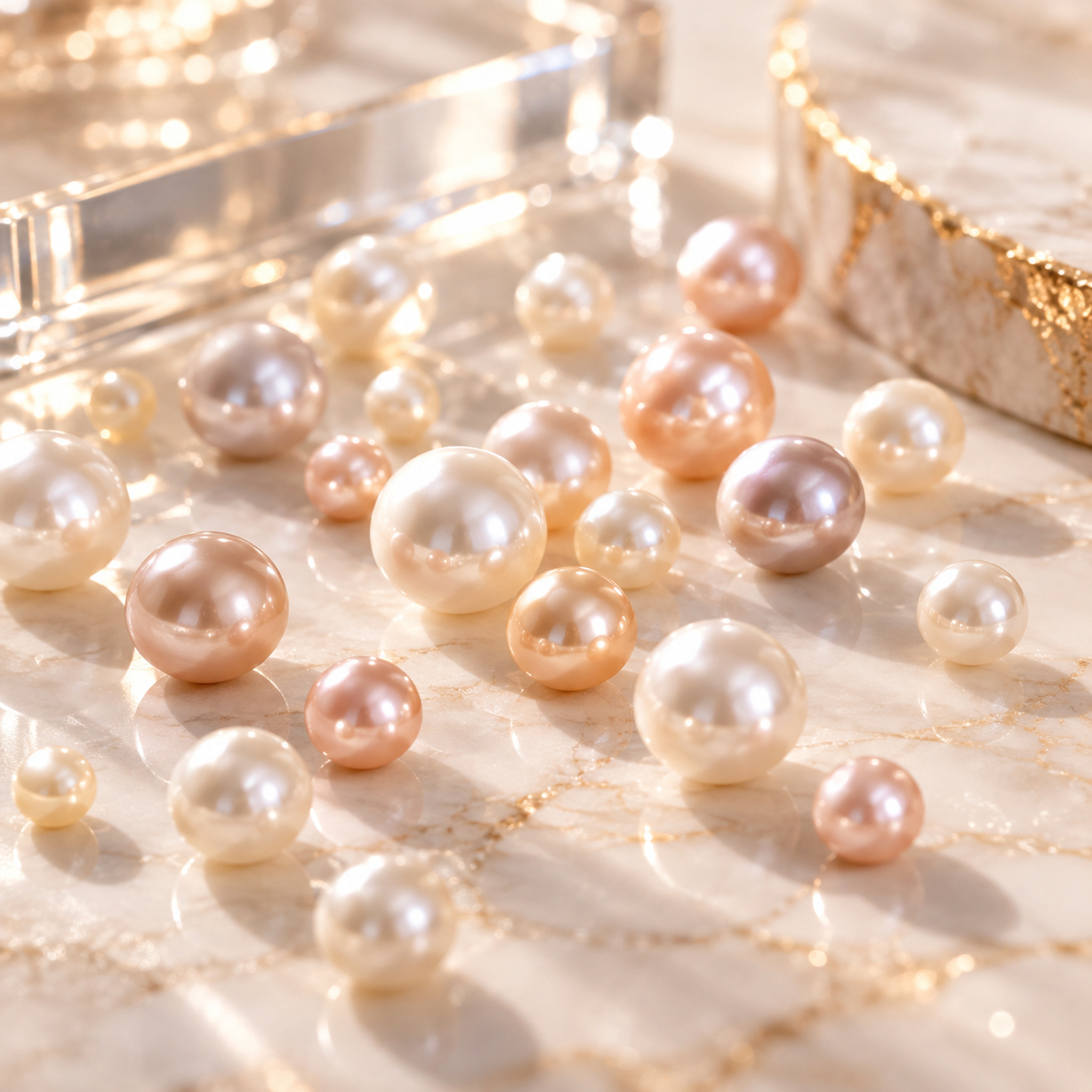
Black onyx is elegant and versatile – it looks wonderful in both men's and women's jewellery, in silver, gold and steel. It combines with hematite, tiger's eye, lava and white pearls for a clean contrast.