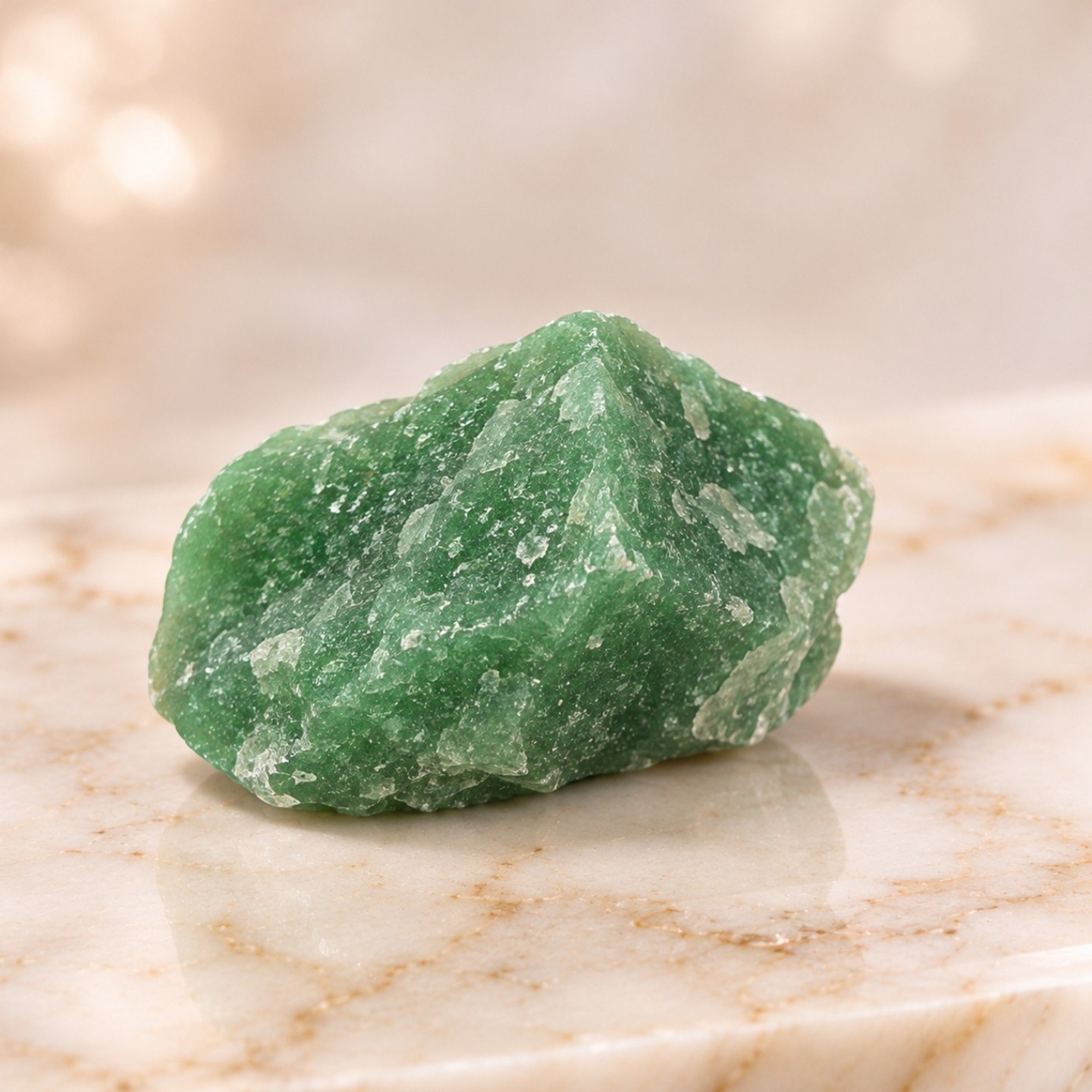
Aventurine is known as "the stone of luck". The best known is green aventurine, but the stone also occurs in blue, red, orange, yellow and brown.
The sparkle
Aventurine is a variety of quartz with tiny inclusions of other minerals that reflect the light. As it moves, the stone glitters with fine sparks – a phenomenon called aventurescence. The green colour comes from flakes of fuchsite – a mineral rich in chromium.
The name
The name has an interesting history. In the 17th century glassmakers in Venice accidentally spilled copper filings into molten glass and obtained a sparkling glass, which they called a ventura – "by chance". Today it is known as goldstone. Later they discovered that nature does the same, and so the natural stone got the name aventurine.
Symbolism
Traditionally aventurine is:
- the stone of luck and opportunity – loved by people who take risks;
- a stone of optimism and a positive outlook on life;
- a stone of inner balance, patience and self-control;
- a stone that encourages creativity and leadership.
It is believed to help us shake off worry and irritation and strengthen our self-confidence.
In jewellery
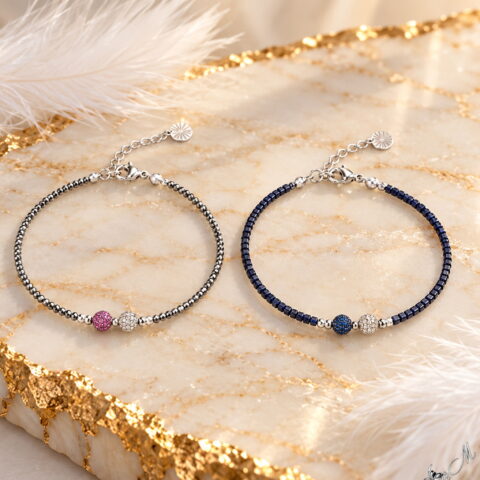
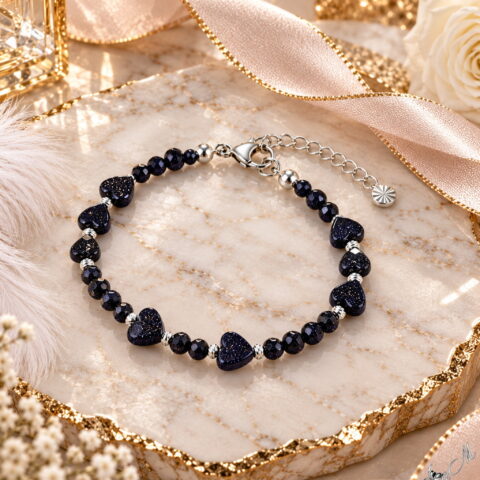
Green aventurine is calm, fresh and natural. It looks wonderful in beaded bracelets – on its own or with agate, jade, rock crystal and wooden elements. With a hardness of 6.5–7 on the Mohs scale it is suitable for everyday wear.